Apartamentos Recoletos Parque del Retiro: Madrid’s Great Green Oasis You Can’t Miss
Take a look at all of the news
Parque del Retiro: Madrid’s Great Green Oasis You Can’t Miss
June 17 2026
Madrid 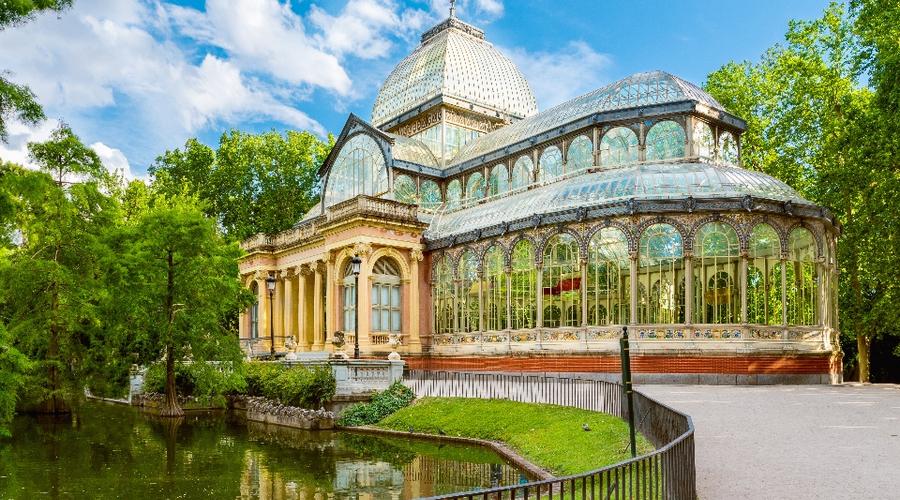
Parque del Retiro is one of Madrid’s most iconic landmarks and an essential stop for anyone wanting to discover the true essence of the city. With more than 125 hectares of gardens, monuments, fountains and tree-lined pathways, this historic space has become a favourite retreat for both locals and visitors looking to escape the fast pace of the Spanish capital.
Located in the heart of the city, next to the Barrio de Salamanca and just a short walk from some of the country’s most important museums, Parque del Retiro offers the perfect balance between nature, culture and leisure. What is now a large public park was originally an exclusive space reserved for the Spanish monarchy.
Its history dates back to the 17th century, when the Palacio del Buen Retiro and its gardens were built as a recreational residence for the court of Felipe IV. Over time, the complex expanded and evolved into one of Europe’s most important green spaces.
Today, the park has been recognised as a UNESCO World Heritage Site as part of the Paisaje de la Luz, alongside Paseo del Prado.
Beyond its historical significance, Parque del Retiro remains a popular meeting point where people can stroll, exercise, enjoy cultural activities or simply relax under the shade of its centuries-old trees.
What to see in Parque del Retiro
Parque del Retiro is home to many remarkable spots that deserve a leisurely visit. These are some of its highlights.
Palacio de Cristal
One of the park’s most photographed landmarks is Palacio de Cristal, a spectacular iron-and-glass building inaugurated in 1887 to host an exhibition dedicated to the flora of the Philippines.
Inspired by London’s famous Crystal Palace and designed by architect Ricardo Velázquez Bosco, this building has become one of Madrid’s cultural icons. Today, it forms part of the exhibition spaces of the Museo Reina Sofía and regularly hosts contemporary art exhibitions.
Its location beside a small lake surrounded by cypress trees and birds makes the visit especially enjoyable.
Estanque Grande and the Retiro boats
If there is one image that truly represents the park, it is Estanque Grande del Retiro. Built in the 17th century, this artificial lake was once used to host water spectacles and naval performances created to entertain royalty.
Nowadays, it is one of the liveliest areas of the park and offers visitors the opportunity to rent a rowing boat and enjoy a different perspective of the surroundings.
From the water, you can admire stunning views of the Monumento a Alfonso XII, one of the park’s most impressive landmarks.
Monumento a Alfonso XII
Located beside the lake, this monumental ensemble stands out for its large semicircular colonnade and imposing equestrian statue.
Designed by José Grases Riera and completed by Teodoro Anasagasti, it was inaugurated in 1922 and has become one of the park’s main gathering points.
Its steps are a popular place for visitors to sit, relax in the sun or watch the activity taking place on the lake.
Paseo de la Argentina or Paseo de las Estatuas
Another fascinating area is Paseo de la Argentina, popularly known as Paseo de las Estatuas.
Along this pathway, you will find numerous sculptures dedicated to different Spanish monarchs. These statues were originally intended to decorate the Royal Palace but were eventually distributed across various locations throughout Madrid.
Walking among them offers a unique opportunity to discover an important part of Spain’s history while enjoying one of the park’s most monumental promenades.
La Rosaleda
Between May and June, La Rosaleda del Retiro becomes one of Madrid’s most beautiful spots.
This garden is home to more than 4,000 rose bushes of different varieties and colours, creating the perfect setting for a peaceful walk surrounded by fragrances and lush vegetation.
Designed by Cecilio Rodríguez at the beginning of the 20th century, it is one of the favourite places for those seeking a moment of tranquillity in the city centre.
La Casita del Pescador
Hidden among the vegetation lies La Casita del Pescador, one of the park’s most romantic corners.
This small building was commissioned by Fernando VII as a private retreat for the royal family. Surrounded by an artificial pond, it looks like something out of a fairy tale and remains one of the park’s lesser-known attractions.
Its peaceful atmosphere makes it an essential stop for anyone wanting to discover Retiro’s hidden side.
Things to do in Parque del Retiro
Parque del Retiro is much more than a historic garden. Every day, it hosts a wide variety of activities for all ages.
Some of the most popular activities include:
Taking a boat ride on the lake.
Going for a run along its pathways.
Practising yoga or outdoor fitness activities.
Exploring the Senda Botánica del Retiro, a route that showcases dozens of plant species.
Enjoying concerts and performances by street musicians.
Visiting temporary exhibitions at Palacio de Cristal and Palacio de Velázquez.
Attending the Feria del Libro de Madrid, one of the city's most important cultural events.
Thanks to its vast size, there is always a new corner waiting to be discovered.
Where to stay near Parque del Retiro
If you are looking for comfortable accommodation in a prime location to explore this area of the city, Apartamentos Recoletos is an excellent choice.
Located just a 5-minute walk from Parque del Retiro, this aparthotel in Madrid city centre enjoys a privileged location in the heart of Barrio de Salamanca, one of the capital’s most elegant, exclusive and best-connected neighbourhoods.
The apartments feature fully equipped kitchens, free Wi-Fi and spacious interiors designed for city breaks, business trips and longer stays.
In addition, from Apartamentos Recoletos you can easily reach other iconic landmarks such as Puerta del Sol, Gran Vía, Museo del Prado and Plaza Mayor, enjoying the convenience of exploring Madrid on foot.
Staying at Apartamentos Recoletos allows you to have Parque del Retiro practically on your doorstep and enjoy one of Madrid’s most special places whenever you wish. A true urban oasis where you can stroll, exercise, discover historical monuments or simply disconnect from the pace of the city while surrounded by nature.
Located in the heart of the city, next to the Barrio de Salamanca and just a short walk from some of the country’s most important museums, Parque del Retiro offers the perfect balance between nature, culture and leisure. What is now a large public park was originally an exclusive space reserved for the Spanish monarchy.
Its history dates back to the 17th century, when the Palacio del Buen Retiro and its gardens were built as a recreational residence for the court of Felipe IV. Over time, the complex expanded and evolved into one of Europe’s most important green spaces.
Today, the park has been recognised as a UNESCO World Heritage Site as part of the Paisaje de la Luz, alongside Paseo del Prado.
Beyond its historical significance, Parque del Retiro remains a popular meeting point where people can stroll, exercise, enjoy cultural activities or simply relax under the shade of its centuries-old trees.
What to see in Parque del Retiro
Parque del Retiro is home to many remarkable spots that deserve a leisurely visit. These are some of its highlights.
Palacio de Cristal
One of the park’s most photographed landmarks is Palacio de Cristal, a spectacular iron-and-glass building inaugurated in 1887 to host an exhibition dedicated to the flora of the Philippines.
Inspired by London’s famous Crystal Palace and designed by architect Ricardo Velázquez Bosco, this building has become one of Madrid’s cultural icons. Today, it forms part of the exhibition spaces of the Museo Reina Sofía and regularly hosts contemporary art exhibitions.
Its location beside a small lake surrounded by cypress trees and birds makes the visit especially enjoyable.
Estanque Grande and the Retiro boats
If there is one image that truly represents the park, it is Estanque Grande del Retiro. Built in the 17th century, this artificial lake was once used to host water spectacles and naval performances created to entertain royalty.
Nowadays, it is one of the liveliest areas of the park and offers visitors the opportunity to rent a rowing boat and enjoy a different perspective of the surroundings.
From the water, you can admire stunning views of the Monumento a Alfonso XII, one of the park’s most impressive landmarks.
Monumento a Alfonso XII
Located beside the lake, this monumental ensemble stands out for its large semicircular colonnade and imposing equestrian statue.
Designed by José Grases Riera and completed by Teodoro Anasagasti, it was inaugurated in 1922 and has become one of the park’s main gathering points.
Its steps are a popular place for visitors to sit, relax in the sun or watch the activity taking place on the lake.
Paseo de la Argentina or Paseo de las Estatuas
Another fascinating area is Paseo de la Argentina, popularly known as Paseo de las Estatuas.
Along this pathway, you will find numerous sculptures dedicated to different Spanish monarchs. These statues were originally intended to decorate the Royal Palace but were eventually distributed across various locations throughout Madrid.
Walking among them offers a unique opportunity to discover an important part of Spain’s history while enjoying one of the park’s most monumental promenades.
La Rosaleda
Between May and June, La Rosaleda del Retiro becomes one of Madrid’s most beautiful spots.
This garden is home to more than 4,000 rose bushes of different varieties and colours, creating the perfect setting for a peaceful walk surrounded by fragrances and lush vegetation.
Designed by Cecilio Rodríguez at the beginning of the 20th century, it is one of the favourite places for those seeking a moment of tranquillity in the city centre.
La Casita del Pescador
Hidden among the vegetation lies La Casita del Pescador, one of the park’s most romantic corners.
This small building was commissioned by Fernando VII as a private retreat for the royal family. Surrounded by an artificial pond, it looks like something out of a fairy tale and remains one of the park’s lesser-known attractions.
Its peaceful atmosphere makes it an essential stop for anyone wanting to discover Retiro’s hidden side.
Things to do in Parque del Retiro
Parque del Retiro is much more than a historic garden. Every day, it hosts a wide variety of activities for all ages.
Some of the most popular activities include:
Taking a boat ride on the lake.
Going for a run along its pathways.
Practising yoga or outdoor fitness activities.
Exploring the Senda Botánica del Retiro, a route that showcases dozens of plant species.
Enjoying concerts and performances by street musicians.
Visiting temporary exhibitions at Palacio de Cristal and Palacio de Velázquez.
Attending the Feria del Libro de Madrid, one of the city's most important cultural events.
Thanks to its vast size, there is always a new corner waiting to be discovered.
Where to stay near Parque del Retiro
If you are looking for comfortable accommodation in a prime location to explore this area of the city, Apartamentos Recoletos is an excellent choice.
Located just a 5-minute walk from Parque del Retiro, this aparthotel in Madrid city centre enjoys a privileged location in the heart of Barrio de Salamanca, one of the capital’s most elegant, exclusive and best-connected neighbourhoods.
The apartments feature fully equipped kitchens, free Wi-Fi and spacious interiors designed for city breaks, business trips and longer stays.
In addition, from Apartamentos Recoletos you can easily reach other iconic landmarks such as Puerta del Sol, Gran Vía, Museo del Prado and Plaza Mayor, enjoying the convenience of exploring Madrid on foot.
Staying at Apartamentos Recoletos allows you to have Parque del Retiro practically on your doorstep and enjoy one of Madrid’s most special places whenever you wish. A true urban oasis where you can stroll, exercise, discover historical monuments or simply disconnect from the pace of the city while surrounded by nature.